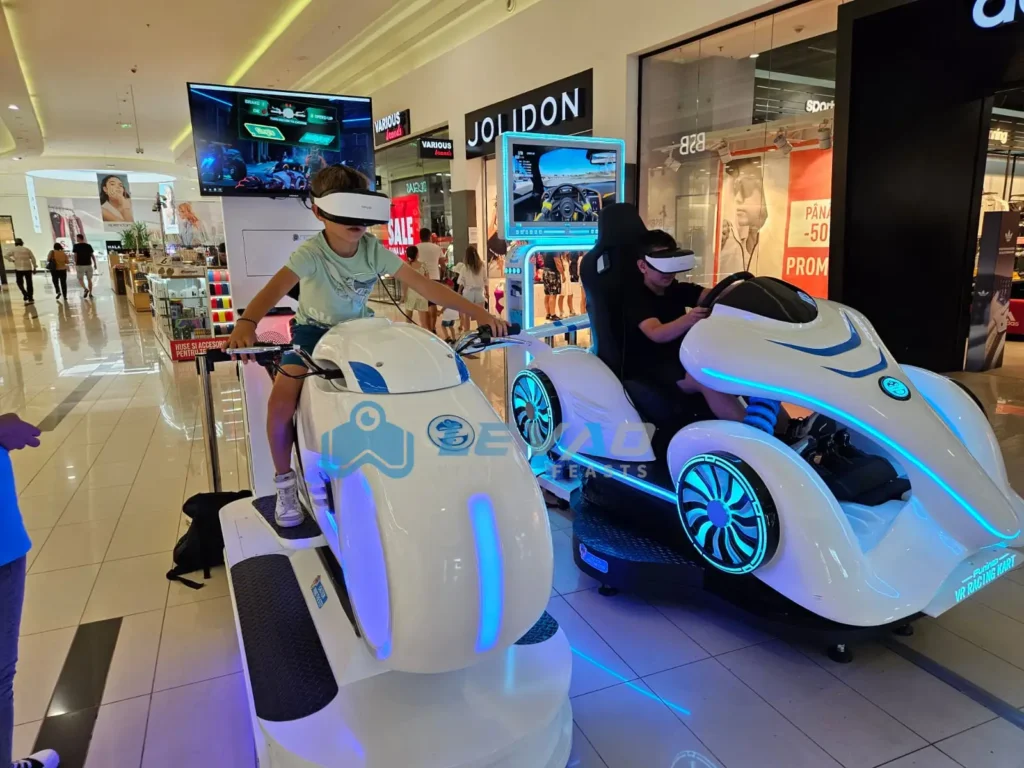
VR racing simulator brings real racing excitement to players. Users experience 360-degree visuals, realistic speed, and immersive sound. It gives thrilling moments like real driving, keeping customers entertained.
Unlike traditional racing games, a VR racing simulator provides full control and interaction. Players feel every turn, bump, and acceleration. This makes each session exciting for individuals, friends, or groups.
For operators, VR racing simulators attract visitors and encourage repeat play. Smooth operation and reliable hardware are key to success. Partnering with Levao ensures a professional setup, fast support, and consistent performance.
VR Racing Simulator: What Makes It Exciting for Players
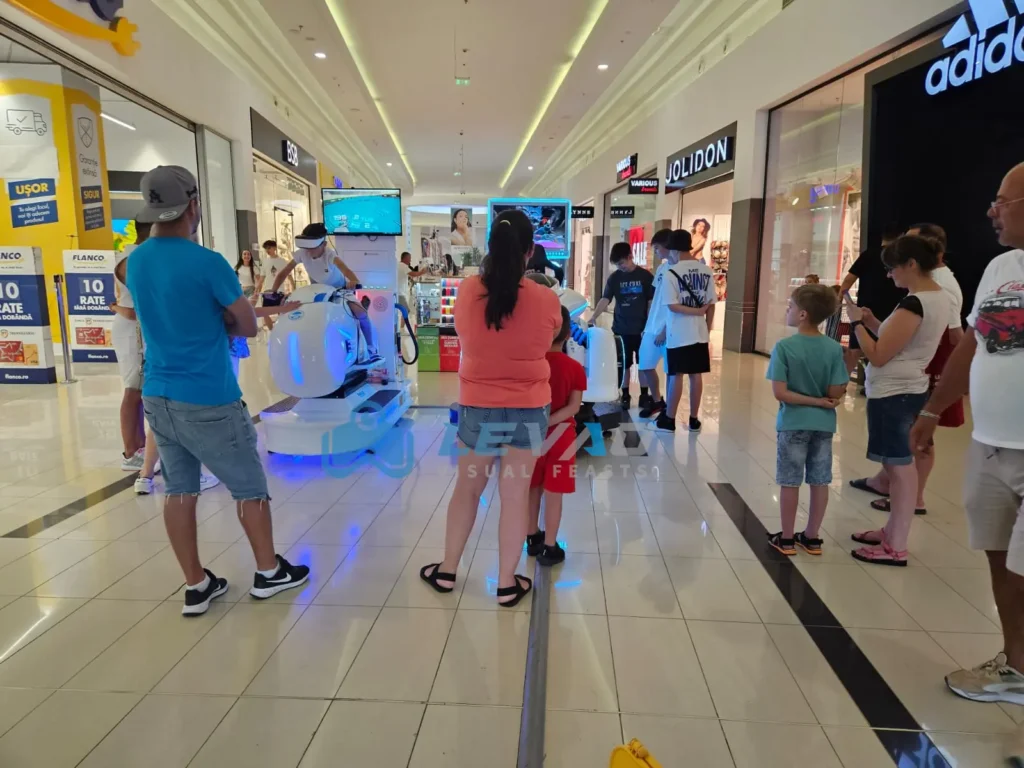
VR racing simulator puts the players into the real world of driving. They get to accelerate, brake, and even turn through narrow corners as it would be in a real car. The tracks are very detailed, and curves, slopes, and obstacles are visible.
Motion seats replicate all the bumps, all the skids, and fast corners. Tilt and shaking are similar to car movement, and the ride is realistic. Players have a sense of control and excitement because of the way the car responds to them naturally.
Multiplayer races and leaderboards are available to players. Online gaming that involves competition with friends or fellow gamers stimulates socialization. This brings the interest, extended play, and a motivation to come back to play more races.
Why Players Prefer VR Racing Simulators Over Traditional Games
VR racing simulator provides perfect 360 views, as opposed to flat screens. There is a natural ability of players to explore inside the cockpit or through the windows. This makes the experience more realistic.
The system is tactile and offers motion, force, and vibration. All the bumps, skids, and accelerations are real. Players are capable of feeling the reaction of the car, which cannot be achieved using traditional controllers.
Every session is personalized to suit the customer. Players pick cars, the level of the track, and the mode of racing to suit their abilities. Novices can have simple tracks, and the experienced ones will be able to perform more difficult tasks to ensure that everyone is occupied.
How VR Racing Simulator Creates Realistic Racing Experiences
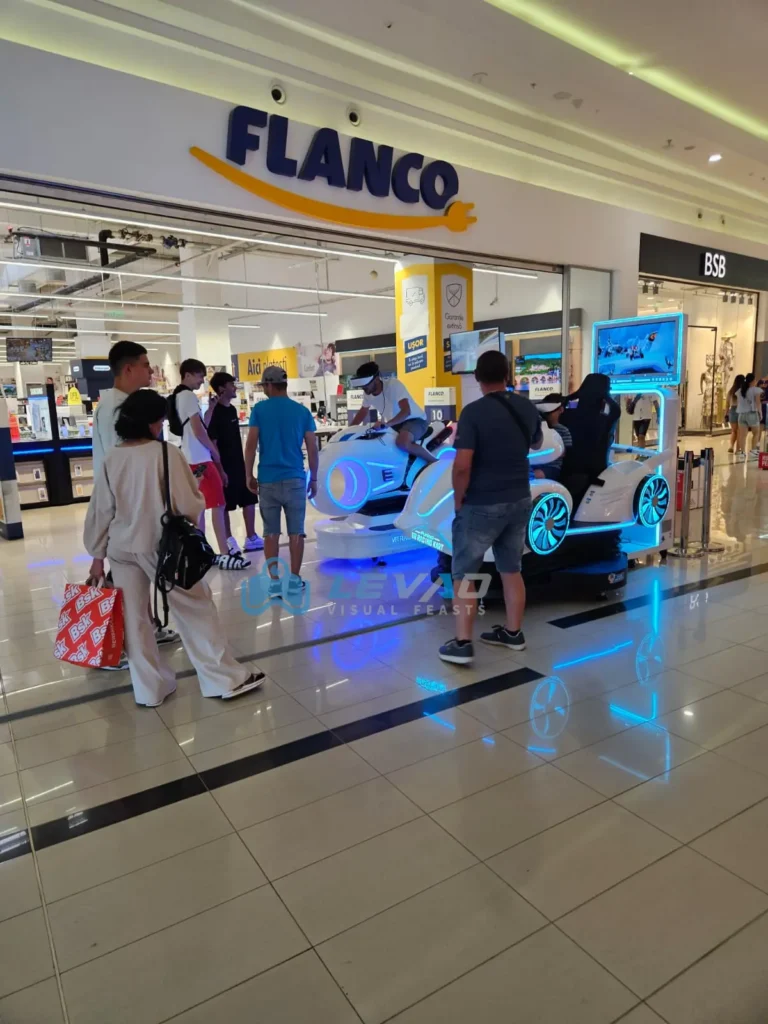
HD graphics reproduce the tracks of reality with the finest details. All the turns, the road’s texture, and the obstacles are well seen. Gamers can respond organically, enhancing the excitement and learning.
Physics engines are real-time computers that compute speed, traction, and collision. The cars can drift, slide, and accelerate like actual cars. The players are completely certain that they are in control of their actions, making it more satisfying and realistic.
There are sound effects that enhance immersion. Car movements are in line with engine sounds, tire screeches, and the sounds of wind. Motion platforms, together with this, ensure that the players have a complete sense of involvement, and the race is therefore memorable.
VR Racing Simulator Setup: Essentials for Smooth Operation
Safe, easy operation and fun experiences are guaranteed with proper setup. VR equipment and motion platforms should be comfortably and conveniently set up.
Sensors and motion platform calibration are essential. Frequent checks will ensure that there is no drift or errancy in the process of play. The employees are supposed to understand how to make changes in order to miss anything.
Updates on software enhance performance and introduce new features. The system is maintained by daily checks and cleaning as well as minor repairs. A trained operator will be able to avoid downtimes and guarantee that players will have a great time all the time.
Common VR Racing Simulator Issues and How to Fix Them
Lag in motion interferes with the game and its experience. Software updates, verifying network connectivity, and recalibration of sensors restore the seamless movement.
The problem of VR headset displays is typical. Most issues can be solved by washing lenses, fixing straps, or turning on devices. Long-term damage can be avoided by means of proper handling.
Motion platforms may wear and tear, which lessens realism. Checking moving components, lubricating working components, and changing worn components ensures rides are safe and immersive.
How VR Racing Simulator Increases Player Engagement and Returns
Thrilling, life-like races will attract repeat business. The players come back to achieve better lap times, experiment with new tracks, or race against their friends. This generates loyalty and consistent business for the entertainment places.
Competitions and leaderboards make people more social. Ranking and awards will encourage amateurs and professionals. Players get a feeling of achievement with the enhancement of engagement.
Customizable sessions attract diverse audiences. Family, teenagers, and corporate groups have custom experiences. This flexibility enhances attendance, prolongs the session, and ensures maximum customer satisfaction.
Why Choose Levao VR Racing Simulator Solutions for Your Business
Levao provides professional VR racing simulator solutions with full support. Installation, calibration, and setup are handled by experts to ensure smooth operation.
High-quality motion platforms, VR headsets, and realistic visuals deliver consistent, immersive experiences. Customers enjoy safe, reliable, and thrilling gameplay.
Partnering with Levao boosts business results. Fast setup, ongoing maintenance guidance, and operator training help increase customer satisfaction, engagement, and revenue.